
ATM Surcharge Fees in Canada
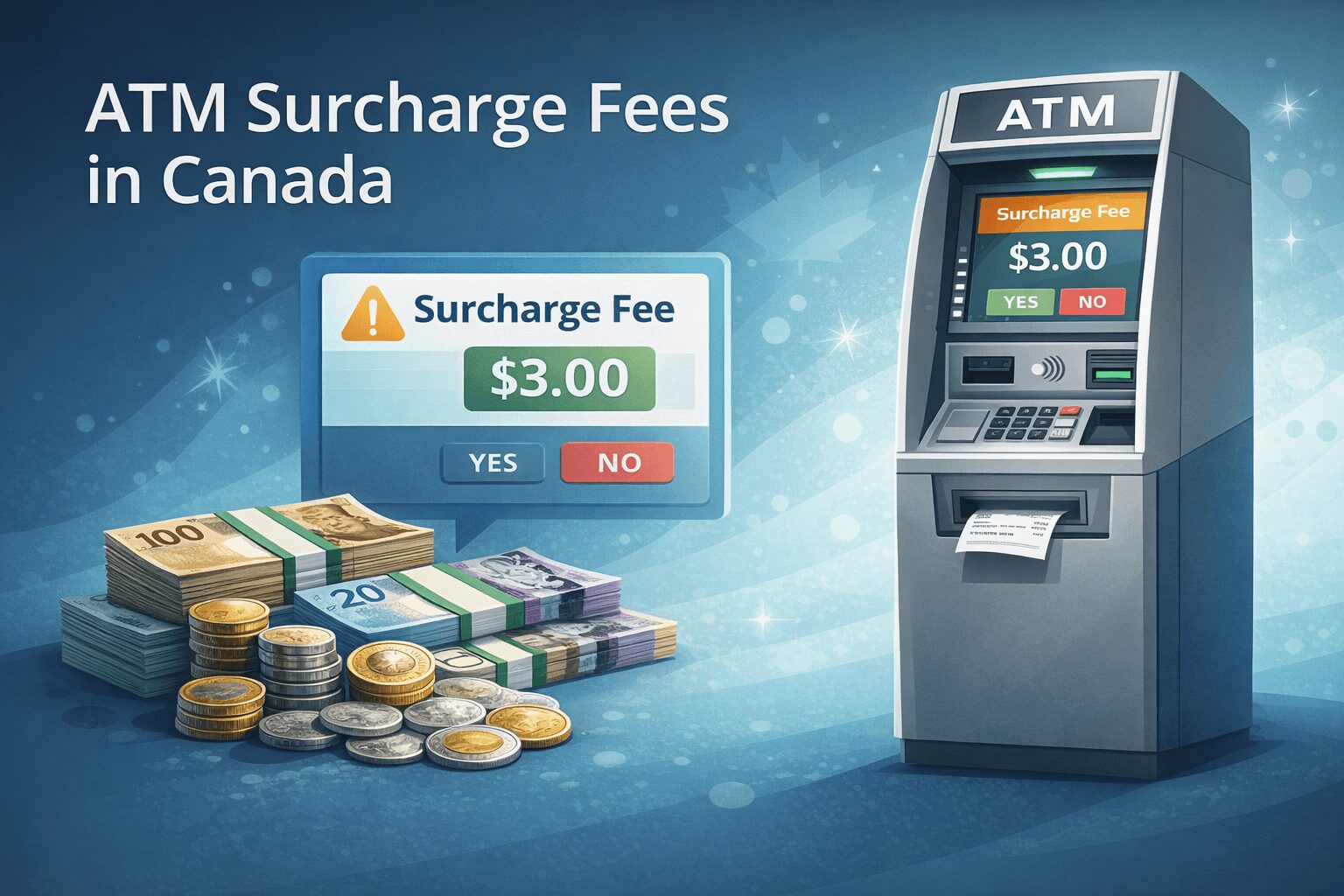
ATM surcharge fees are the convenience fees customers pay when withdrawing cash from an ATM that is not owned by their bank.
In Canada, these fees are set by the ATM operator and must be clearly displayed before the transaction is completed.
Independent ATM operators rely on surcharge revenue to cover ATM equipment, cash handling, network processing, monitoring, and service costs.
Compare ATM profit, understand ATM processing, or explore starting an ATM business in Canada.
Typical ATM Fees in Canada
ATM surcharge fees vary depending on the location and traffic level. Higher-traffic venues such as bars, casinos, and event spaces usually support higher surcharge fees than retail locations.
| Location Type | Typical Fee |
|---|---|
| Retail stores | $2 – $3 |
| Bars / nightclubs | $3 – $4.50 |
| Casinos / events | $4 – $6+ |
| Tourist locations | $3 – $5 |
What ATM Fee Should You Charge?
Choosing the right surcharge fee is one of the most important decisions for ATM profitability. The goal is to balance transaction volume with revenue per withdrawal.
- Too low: high usage but reduced total revenue
- Too high: fewer transactions and lost customers
- Best strategy: match fee to location type and customer behavior
Most operators test and adjust fees over time based on transaction data and customer acceptance.
Who sets ATM surcharge fees?
The ATM owner or operator sets the surcharge fee based on traffic, operating costs, and demand.
- Higher traffic locations allow lower fees
- Lower traffic locations often require higher fees
- Fees must be disclosed before a withdrawal
Why ATMs charge fees
- Machine purchase and maintenance
- Cash loading logistics
- Network processing costs
- Monitoring and service
- Revenue sharing with locations
Surcharge revenue allows ATM operators to provide convenient access to cash while covering the cost of running the machine.
How ATM operators earn revenue
Each withdrawal generates surcharge revenue for the ATM operator. Monthly income is directly tied to transaction volume and fee level.
Simple ATM revenue example
- 300 transactions × $3 fee = $900/month
- 500 transactions × $3 fee = $1,500/month
- 800 transactions × $3.50 fee = $2,800/month
Each withdrawal generates surcharge revenue for the ATM operator. Many ATM locations also share part of that revenue with the business hosting the ATM.
Learn how profitable ATMs can be → How Much Does an ATM Make in Canada